About
History
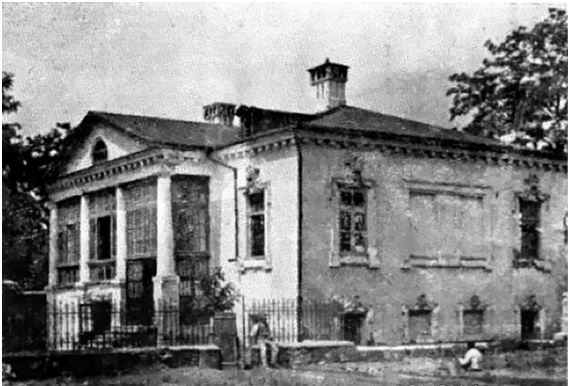
Until the interwar period, on the site of the Parliament building there were private one-story houses, where the city’s nobility lived. Historians claim that this area was the home of Governor Konstantin Katakazi, who administered Bessarabia from 1817 to 1825. He belonged to an aristocratic Russian family of Greek-Phanariote origin, who had large properties in eastern Moldova and was married to Princess Ecaterina, daughter of Constantin Ipsilanti.
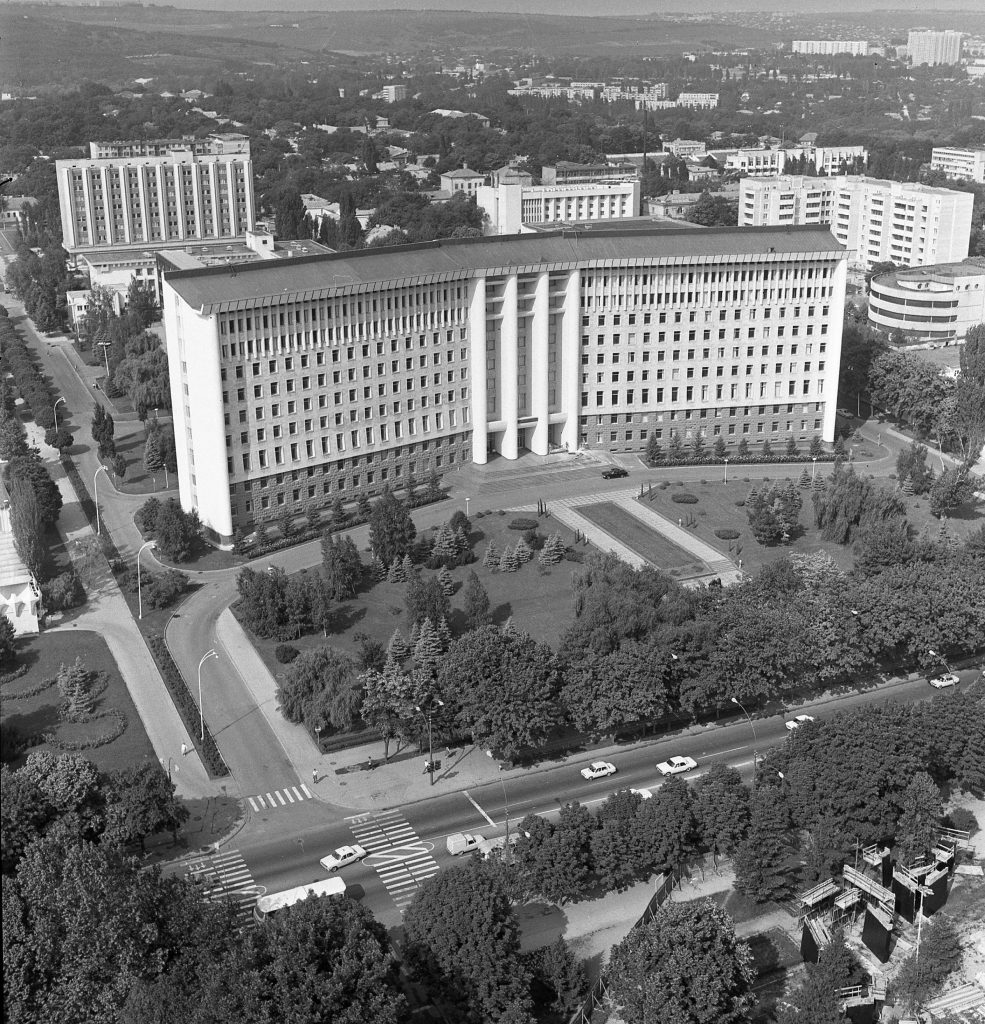
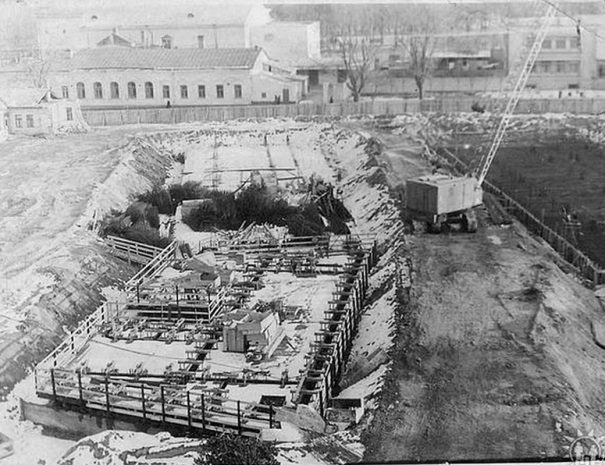
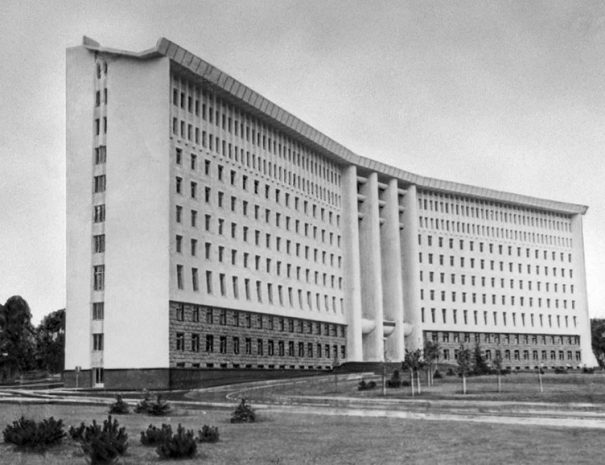
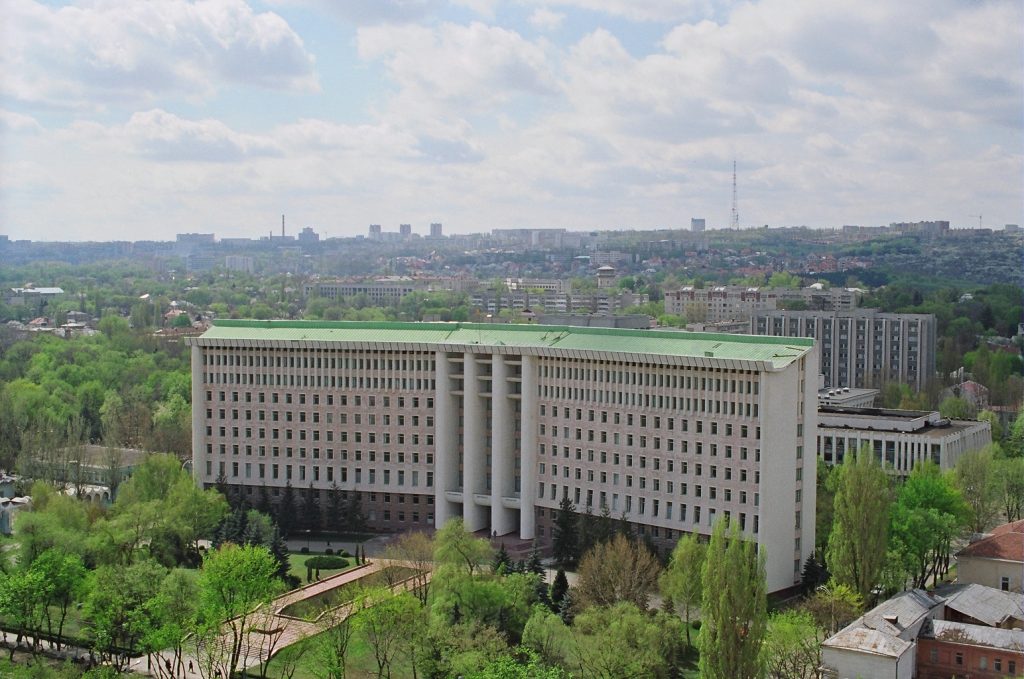
The current Parliament building was built between 1973 and 1976 according to the design of architects Alexandru Cerdanțev and Grigore Bosenco. It was designed as the administrative headquarters for the Central Committee of the Communist Party of the Moldavian Soviet Socialist Republic (MSSR) and is considered a building of national importance.
The State Institute for Construction Design “Moldghiprostroi” was responsible for the design.
The building has the shape of an open book. The motif of the open book, which symbolized the importance and accessibility of knowledge in the Soviet Union, was preferred by many architects at that time. Examples include the “book buildings” on Novy Arbat Street in Moscow, the building of the former Council for Mutual Economic Assistance in Moscow, the Press House in Ashgabat, the building of the new National Library in Grozny, etc.
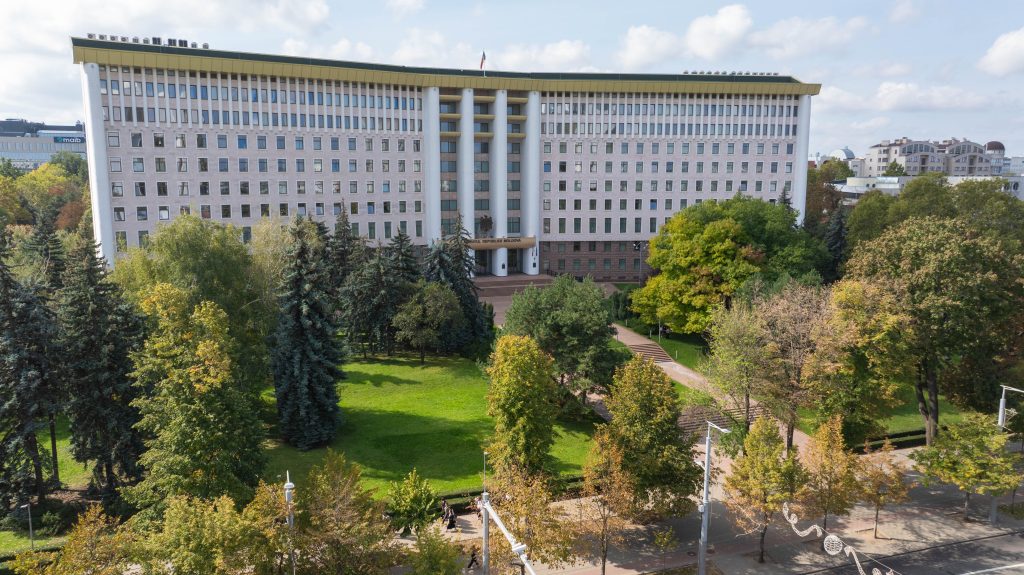
The Parliament of the Republic of Moldova building is a monolithic construction, cast in reinforced concrete, with a facade clad with pink granite and marble slabs and a base – with red granite and marble slabs. The central part of the building is dominated by 4 pilaster pillars raised to the height of the building.
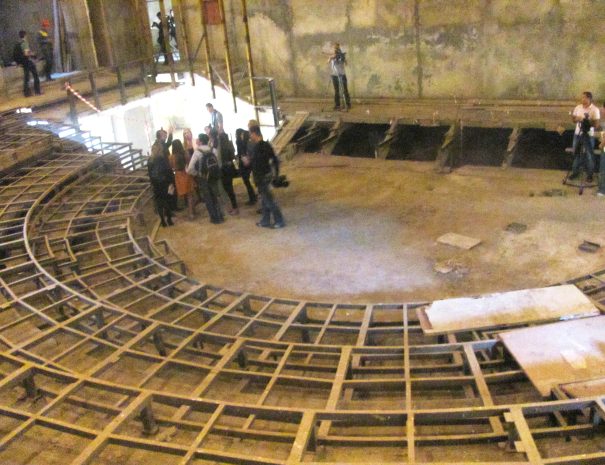
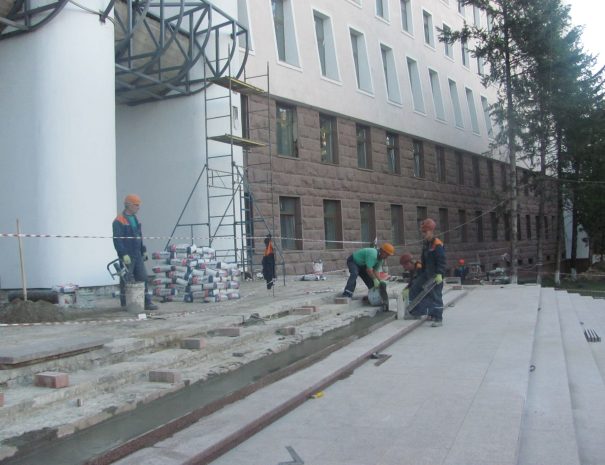
During the protests in April 2009, the building of the Parliament of the Republic of Moldova was devastated. Starting with April 7, 2009, the offices of the Parliament employees were transferred to the building of the Ministry of Agriculture and Food Industry. The reconstruction of the building began in 2009, but the works were stopped the following year due to lack of funds, being resumed only in August 2012.
By 2016, the complex of the Parliament buildings of the Republic of Moldova was expanded to 4 blocks, of which one new (G), with 5 floors, was built behind the main building. Also, the plenary hall was expanded, the offices of the deputies’ advisors, the offices of the factions, a canteen, new elevators, the Children’s Room and a conference room were designed. The building became accessible for people with special needs, being equipped with high-performance ramps.
Currently, the total area of the building is about 15,000 m2.
On the building’s firmament, in August 2016, the State Coat of Arms of the Republic of Moldova was installed. The unique work was executed for 2 years, being made of brass and weighing over 600 kg. For the most part, the symbol was executed manually by a team of specialists, including Simion Odainic, Alexei Colîbneac and Iurie Caminschi. The dimensions of the coat of arms are 2600 mm x 3300 mm. The State Coat of Arms in the plenary hall was executed manually, made of beech and oak wood, and weighs about 40 kg. Sculptor Valeriu Rotari worked on it for four months. All the works were coordinated with the author of the coat of arms, Gheorghe Vrabie, who died in March 2016.
The current headquarters of the Parliament of the Republic of Moldova
In the early 1990s, the building became the seat of the Parliament of the Republic of Moldova. The first plenary sessions were held in this building starting in March 1994. In the first years of its activity, the deputies of the first Parliament met in plenary sessions in the Presidency building. After the early parliamentary elections of February 27, 1994, a new electoral law was adopted, which reduced the number of deputies from 371 to 104 people. Subsequently, according to art. 60 par. (2) of the Constitution of the Republic of Moldova, adopted on July 29, 1994, the number of seats in the Parliament was reduced to 101.
Currently, the Parliament Square has various species of trees and shrubs, including secular trees, such as a Plane Tree (Platanus occidentalis) and 18 specimens of Douglas Fir (Pseudotsuga menziesii).
During the period 2009-2016, during the repair works of the building, works were also carried out to arrange the square. Also during this period, decorative shrubs in the area of the central stairs, in the form of letters, which reproduce the word MOLDOVA, were planted and which have become a tourist attraction.
In 2014, during the Summit of the Speakers of Parliament from the Baltic and Nordic States and, respectively, in 2022, during the joint official visit of the Speakers of Parliament from the Baltic and Nordic States, thuja saplings were symbolically planted in the square.
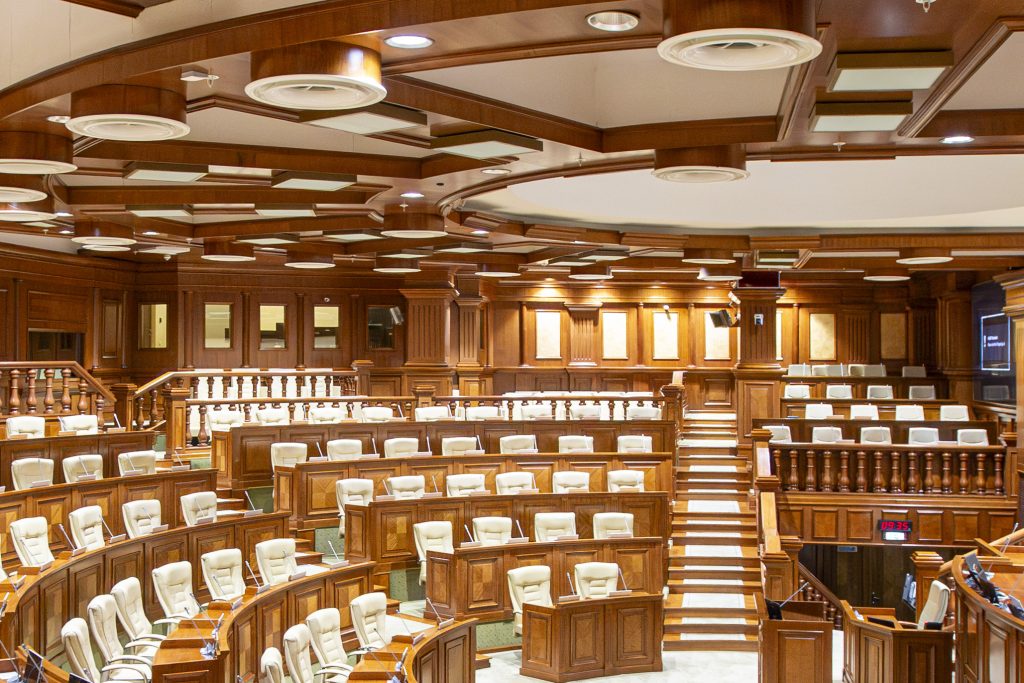
Plenary Sitting Hall
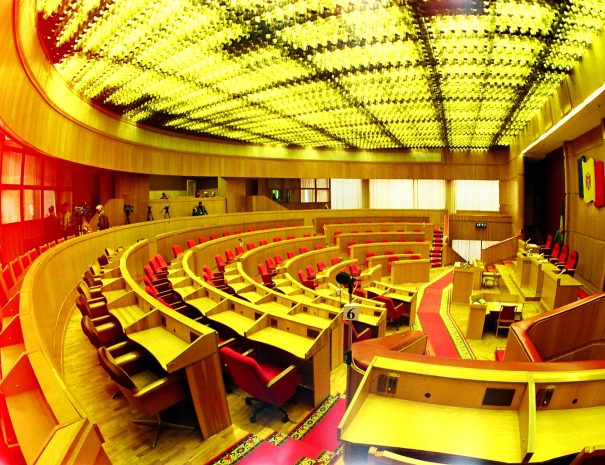
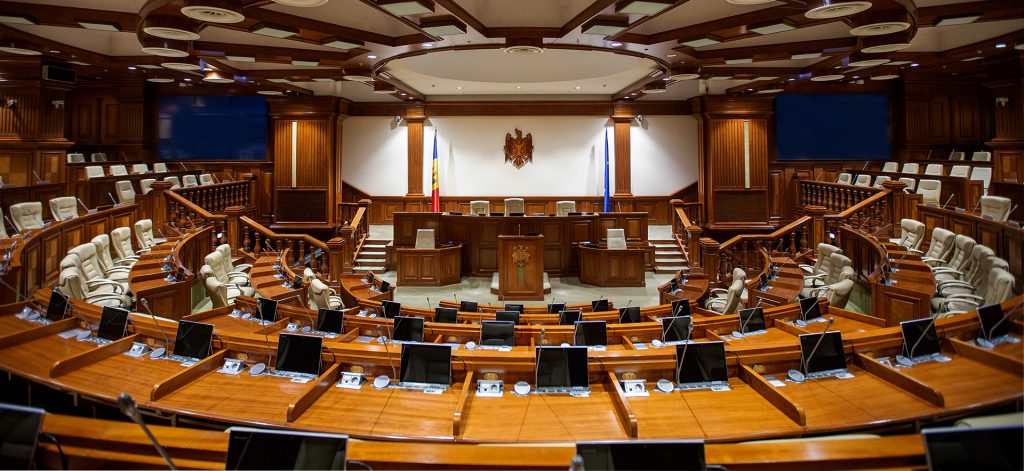
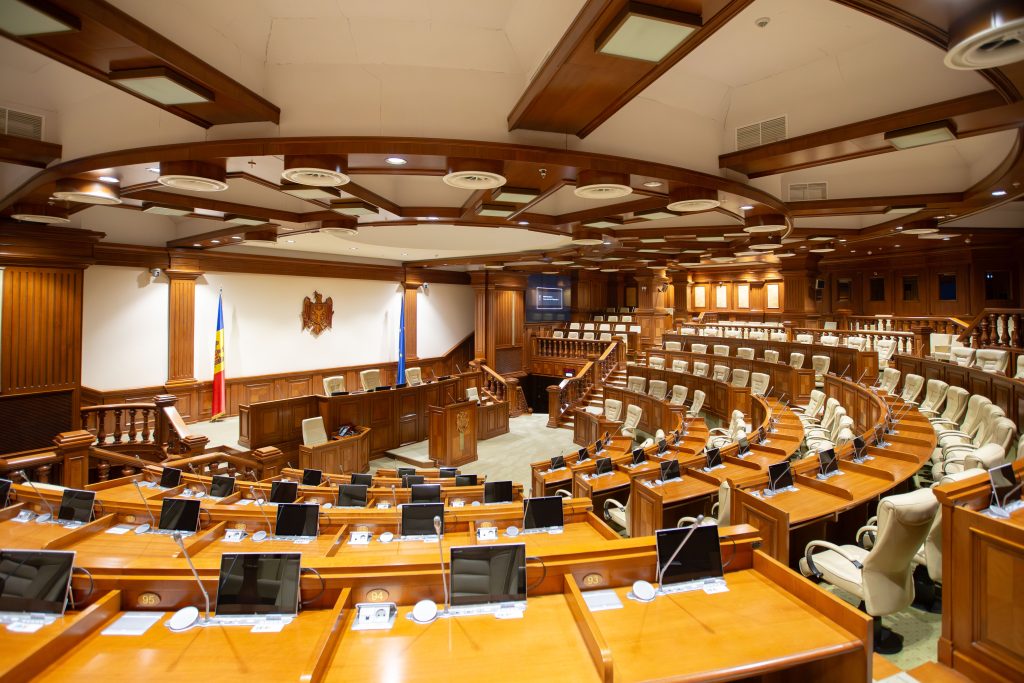
In February 2014, at the beginning of the spring session, the legislative forum returned to the renovated headquarters of the Parliament. Until then, since April 2009, the deputies met in plenary sessions in the large hall of the Palace of the Republic. The total area of the plenary session hall is about 300 m2, with a capacity of 190 seats. It is the largest hall in the building, being divided into an area for the 101 deputies of the Parliament of the Republic of Moldova and an area for guests, including from the Government, the Secretariat of the Parliament, institutions subordinate to the Parliament, the diplomatic corps, for visitors, and representatives of the media.
Starting with 2021, the electronic voting system is operating. Two booths have been set up in the upper part of the hall, intended for interpreters who ensure the simultaneous translation of debates in the plenary session of the Parliament. Another novelty is the booths for recording and transmitting images and sound from the plenary hall to the conference room, with the projection of the meeting in the public spaces of the Parliament.
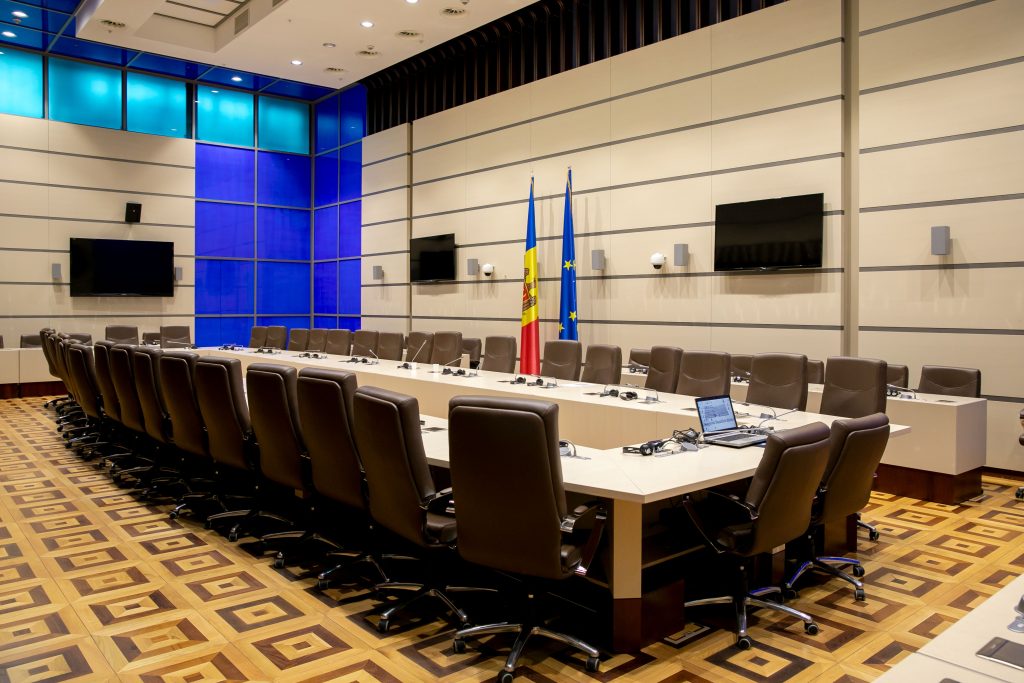
Europe Hall
The Europa Hall was inaugurated on 23 September 2016, and the first meeting in this hall was that of the Parliamentary Council for European Integration. Various large-format meetings, public consultations and hearings, high-level meetings, working meetings at both national and international levels take place here. Events taking place in the Europa Hall can be broadcast live via the Parliament’s communication channels. It is the second largest hall in the Parliament building and has a capacity of 70 seats.
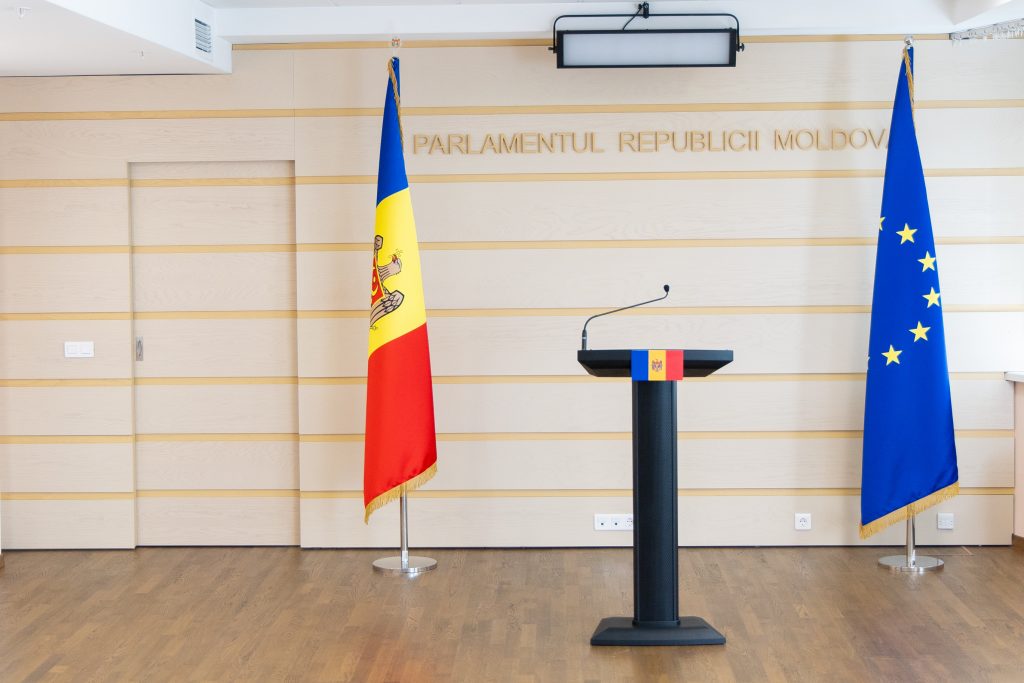
Press conference room
During the construction of Block G, a room intended for the activities of journalists was also provided, called the Press Conference Room. This is located on the second level of the building and is a working space for journalists accredited to the Parliament. The room is equipped with all the necessary utilities for organizing and holding press conferences, statements or presentations. Journalists have access to the live broadcast from the Plenary Hall and the Europa Hall.
Museum of the Parliament
It was inaugurated on 23 May 2017. The Museum tells the story of parliamentarism in the Republic of Moldova and brings to the public attention a collection of exhibits consisting of historical documents, photographs and protocol gifts.
Among the most relevant exhibits are the gallery of the pictures of former Speakers, the protocol edition of the Constitution of the Republic of Moldova, copies of the Declaration of Independence, Declaration of Sovereignty, the Act of the Reunification of Bessarabia with Romania in 1918, a representation of the State Coat of Arms with the original signature of the author – the visual artist Gheorghe Vrabie.
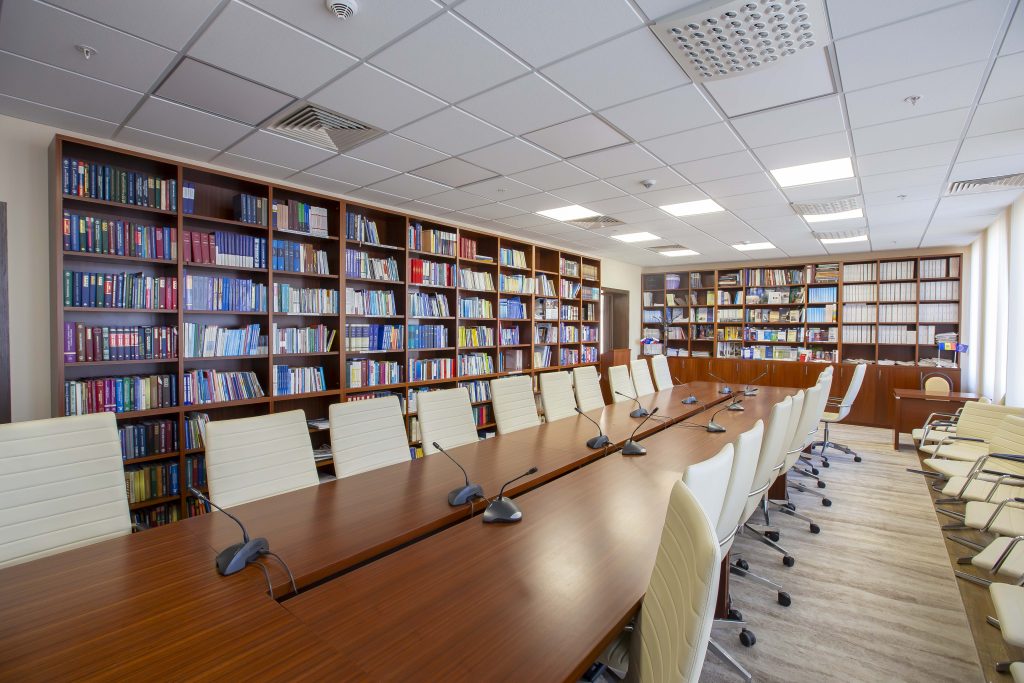
Library of the Parliament
The Library is an integral part of the Parliament’s information system and plays an important role in providing, processing and preserving information, aimed at providing information support to Parliament’s work. The collection of the Library includes various categories of documents and is expanded annually with new titles. Most of the publications in the Library’s collection reflect the fields of legal sciences, economics, politics, international relations, etc.
Rooms for meetings of the standing committees
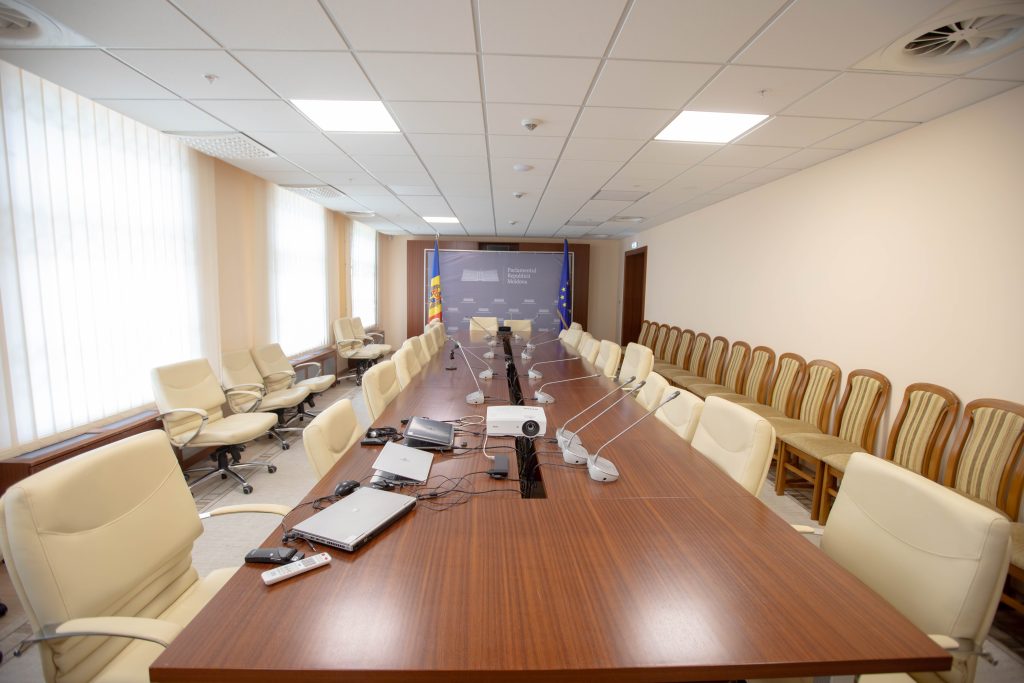
For ordinary meetings, the committees meet in the offices of their chairs, which have a capacity of 20 seats. Hearings and public consultations organised by the committees are held in one of the six meeting rooms in the building.
MP’s offices
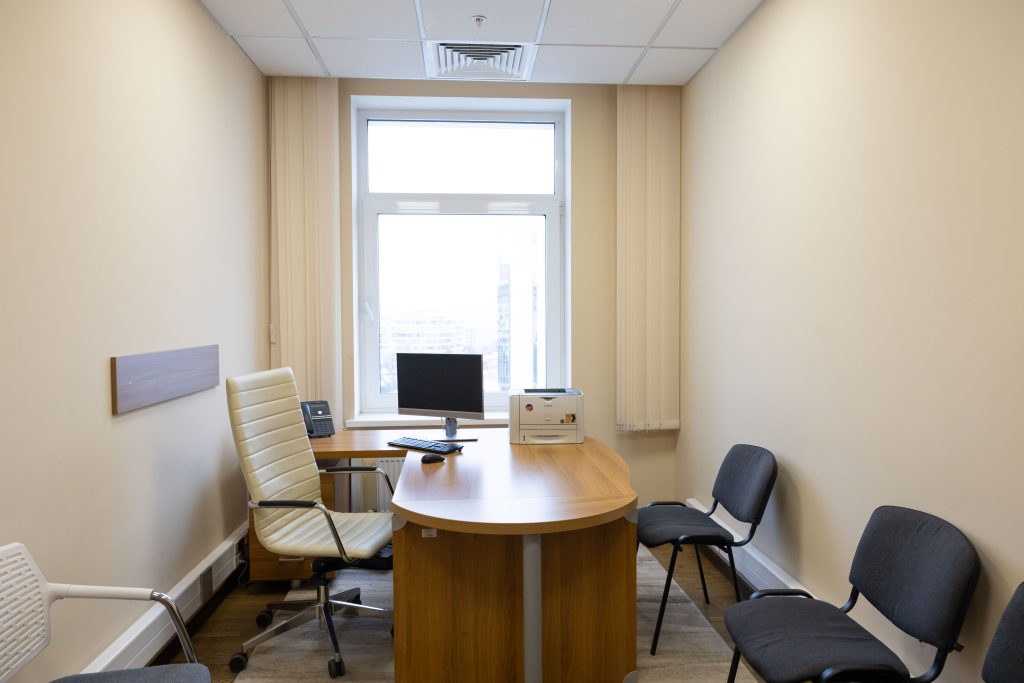
Each MP has their own office providing space for them and their assistant. The MPs’ offices are located at the 5th to 9th floor.